15 Knit Sweater Patterns for Every Skill Level

Knitting a sweater can feel like a big project, especially if you are making one for the first time. Unlike smaller projects such as scarves or hats, sweaters involve choosing the right size, working with gauge, shaping different sections, and often joining several pieces together. The good news is that there are plenty of knit sweater patterns designed for different skill levels, so you can choose a project that matches your experience and the amount of time you want to spend knitting.
From simple pullovers and oversized sweaters to classic cardigans and textured designs, sweater knitting offers countless possibilities. The key is choosing a pattern that fits your skills, yarn preference, and desired finished measurements.
In this guide, you will find 15 sweater ideas to inspire your next knitting project, along with practical information about yarn weights, sizing, gauge, construction, and how to choose the right pattern.
1. Simple Knit Pullover
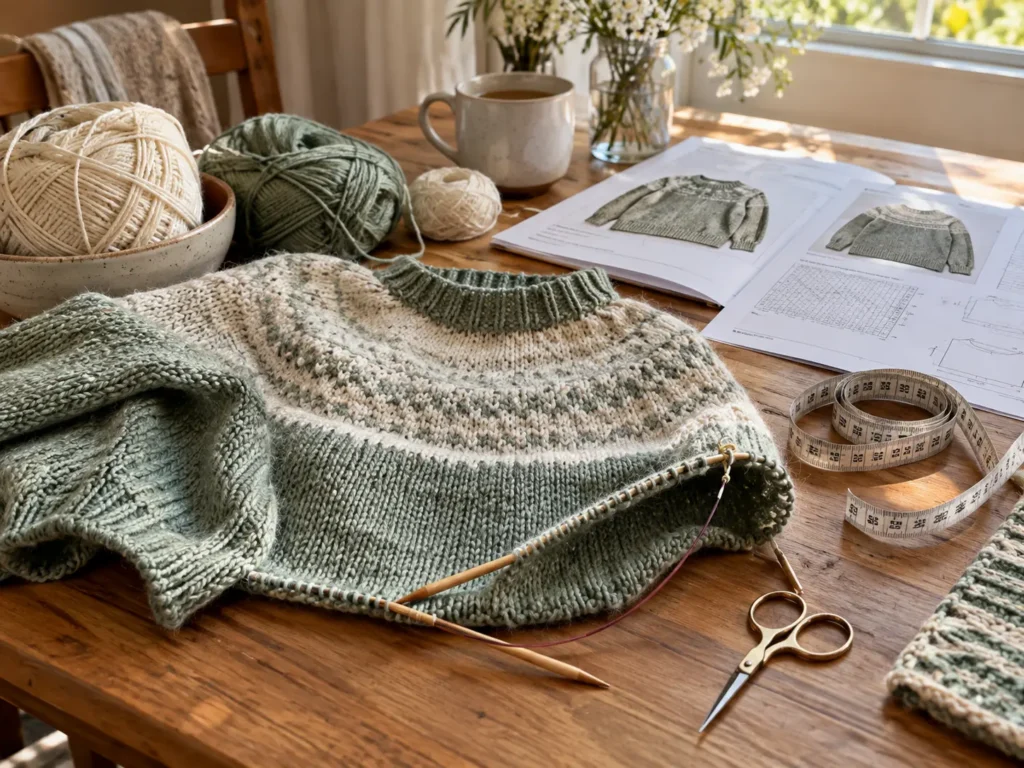
A simple pullover is one of the most useful sweater projects for a knitter who wants to make a wearable garment without complicated details.
A basic pullover usually has a straightforward shape with a simple neckline, sleeves, and body. Depending on the pattern, it may be worked in separate pieces and seamed together or knitted in one piece.
For a first sweater, look for a design with minimal shaping and clear instructions.
Good for: Beginner to intermediate knitters
Typical yarn: DK, worsted, or aran
Construction: Top-down or seamed
Main skills: Knit, purl, ribbing, basic shaping
2. Classic Crewneck Sweater
The crewneck sweater is a timeless style that works well for everyday wear.
Its rounded neckline makes it relatively simple compared with sweaters that include more complicated neck shaping. A classic crewneck can also be adapted to many yarn weights and styles.
If you want a versatile handmade sweater, a simple crewneck is a practical project to consider.
Good for: Beginner to intermediate knitters
Typical yarn: DK or worsted weight
Neckline: Crewneck
Style: Classic and versatile
Why choose a crewneck?
- Easy to style
- Suitable for many seasons
- Works with different yarn colors
- Can be made fitted or oversized
- Available in many construction styles
3. Oversized Knit Sweater
Oversized sweaters are popular because they offer a relaxed fit and can be comfortable for everyday use.
An oversized design can also be a good option when you want a slightly more forgiving fit. However, oversized does not simply mean choosing a much larger size. The pattern should provide measurements that account for the intended ease.
When choosing an oversized pattern, always compare the finished garment measurements rather than relying only on your usual clothing size.
Good for: Beginner to intermediate
Typical yarn: Bulky, chunky, worsted, or aran
Fit: Relaxed or oversized
Best feature: Comfortable silhouette
4. Chunky Knit Sweater
A chunky sweater can be an excellent choice when you want a project that works up relatively quickly.
Thicker yarn generally requires larger needles, which means fewer stitches are needed to reach the finished dimensions. This can make a chunky sweater feel faster to knit than a lightweight sweater.
However, chunky yarn also produces a heavier garment, so consider the finished weight and drape before choosing your pattern.
Good for: Beginner to intermediate
Typical yarn: Bulky or super bulky
Needles: Larger needles according to the yarn and pattern
Best for: Cozy cold-weather sweaters
5. Raglan Knit Sweater
Raglan sweaters are recognizable by diagonal lines that run from the neckline toward the underarm.
One reason raglan construction is popular is that many designs can be worked from the top down. This allows you to try on the sweater as you work and make adjustments to the length.
A top-down raglan can therefore be an interesting project for knitters who want to learn more about sweater construction.
Good for: Intermediate knitters
Construction: Often top-down
Main feature: Diagonal raglan shaping
Useful skills: Increasing, knitting in the round, neckline shaping
6. Top-Down Knit Sweater
Top-down sweater patterns begin around the neckline and continue toward the body and sleeves.
One major advantage is that you can often check the fit while the sweater is still on your needles. This can make it easier to adjust the body or sleeve length.
Top-down patterns may also reduce the amount of sewing required because many are worked as one continuous piece.
Typical top-down construction
- Cast on around the neckline.
- Work the neckline.
- Increase for the yoke.
- Separate the sleeves from the body.
- Continue knitting the body.
- Knit the sleeves.
- Finish the cuffs and hem.
- Weave in the ends.
7. Bottom-Up Knit Sweater
Bottom-up sweaters are constructed in the opposite direction.
The body is usually worked from the hem upward, while the sleeves are worked separately or according to the specific construction. Pieces may then be joined and finished at the neckline.
This construction can be especially useful for knitters who prefer traditional sweater assembly.
Good for: Intermediate knitters
Construction: Bottom-up
Useful skills: Shaping, joining, seaming, finishing
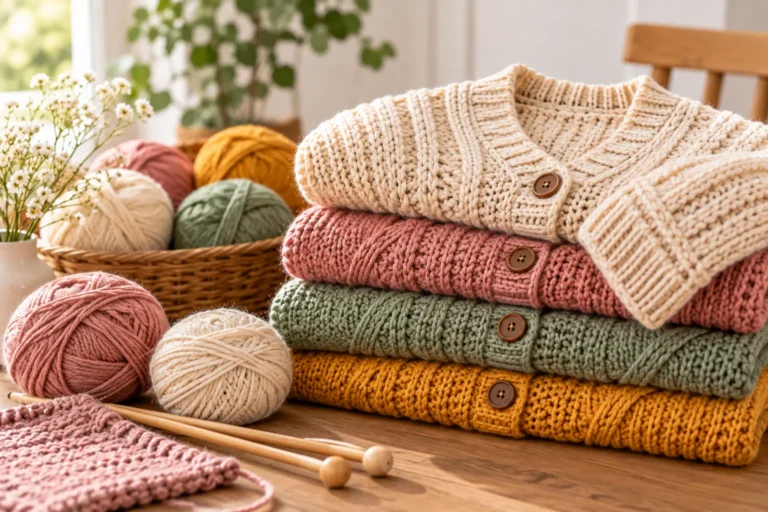
8. Knit Cardigan
A cardigan is an excellent alternative to a traditional pullover because it opens at the front.
Depending on the pattern, a cardigan may be knitted flat or constructed using a combination of flat and circular knitting.
Simple cardigans can have minimal shaping, while more advanced designs may include cables, colorwork, pockets, button bands, or shaped fronts.
Things to check before starting
- Finished chest measurement
- Body length
- Sleeve length
- Button size
- Button spacing
- Yarn quantity
- Gauge
- Ease
9. Knit Sweater With Ribbed Details
Ribbing is commonly used around sweater cuffs, hems, and necklines because it creates a stretchy fabric that helps garments maintain their shape.
A sweater can also use ribbing as a decorative element throughout the design.
Common ribbing patterns include:
| Ribbing | Basic Repeat |
|---|---|
| 1×1 Rib | Knit 1, purl 1 |
| 2×2 Rib | Knit 2, purl 2 |
| 3×1 Rib | Knit 3, purl 1 |
| Broken Rib | Alternating knit and purl sequences |
Always follow the exact stitch instructions in your chosen pattern because different rib patterns can have different stitch multiples.
10. Cable Knit Sweater
Cable sweaters create raised, three-dimensional patterns by crossing stitches over one another.
They can look complicated, but cables are built from specific stitch movements that become easier with practice.
If you are new to cables, start with a sweater that uses a simple cable motif rather than a design filled with several complicated cable charts.
Good for: Intermediate to advanced knitters
Main skill: Cable crossings
Useful tools: Cable needle if required by the pattern
Style: Textured and decorative
Tip for cable knitting
Keep your cable chart or written instructions nearby and use a row counter or removable marker to help track your progress.
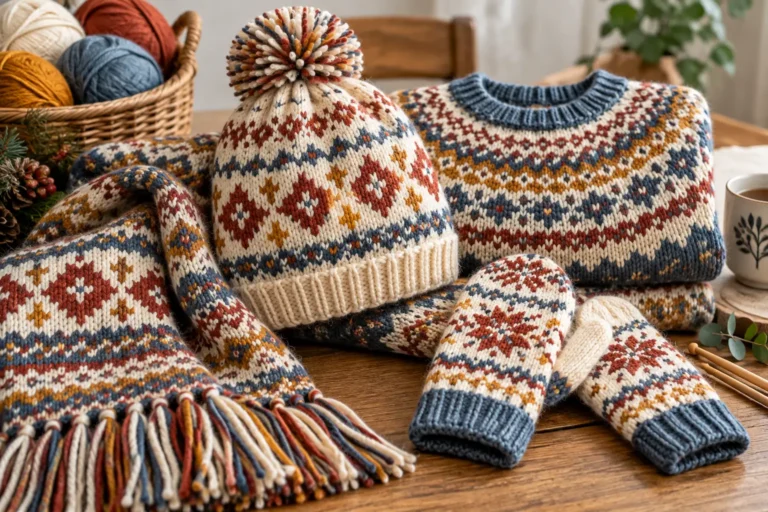
11. Colorwork Knit Sweater
Colorwork sweaters use two or more colors to create decorative patterns.
Some designs use simple stripes, while others use repeating geometric motifs or traditional colorwork techniques.
For a first colorwork sweater, choosing a design with a relatively simple chart can make the project easier to manage.
Good for: Intermediate to advanced knitters
Main challenge: Managing multiple colors
Common styles: Stripes, geometric motifs, Fair Isle-style designs
12. Knit Sweater With a Simple Texture
You do not need cables or multiple colors to create an interesting sweater.
Simple textured stitches can add visual interest while keeping the overall design relatively clean.
Examples include:
- Seed stitch
- Moss stitch
- Garter stitch
- Ribbing
- Simple slipped-stitch textures
Textured sweaters are a useful option when you want a design that looks detailed without relying on complicated color changes.
13. Lightweight Knit Sweater
A lightweight sweater can be useful for transitional seasons or indoor wear.
Patterns made with laceweight, fingering, sport, or DK yarn can create a lighter garment than designs made with bulky yarn.
Because thinner yarn usually requires more stitches and rows, lightweight sweaters can take longer to complete.
Good for: Intermediate knitters
Typical yarn: Fingering, sport, or DK
Best for: Spring, autumn, layering
14. Beginner-Friendly Knit Sweater
If this is your first sweater, look for a pattern that keeps the construction straightforward.
A beginner-friendly sweater does not necessarily have to be completely plain. The important thing is that the pattern gives clear instructions and does not introduce too many unfamiliar techniques at once.
Look for these features:
- Simple shaping
- Clear size information
- Straightforward construction
- Limited color changes
- Basic stitch patterns
- Detailed finishing instructions
- A manageable yarn weight
Before starting, make sure you understand the abbreviations and instructions used in the pattern.
If you are still learning how to read patterns, see our guide: How to Read a Knitting Pattern for Beginners.
15. Classic Everyday Knit Sweater
The final idea is a simple everyday sweater that can become a regular part of your wardrobe.
Instead of choosing a highly complicated design, focus on fit, yarn, and construction. A simple sweater in a color you enjoy wearing can become one of the most useful handmade garments you make.
This type of project is also ideal for practicing your sweater-making skills because you can focus on accurate gauge, shaping, and finishing.
Choosing the Right Yarn for a Knit Sweater
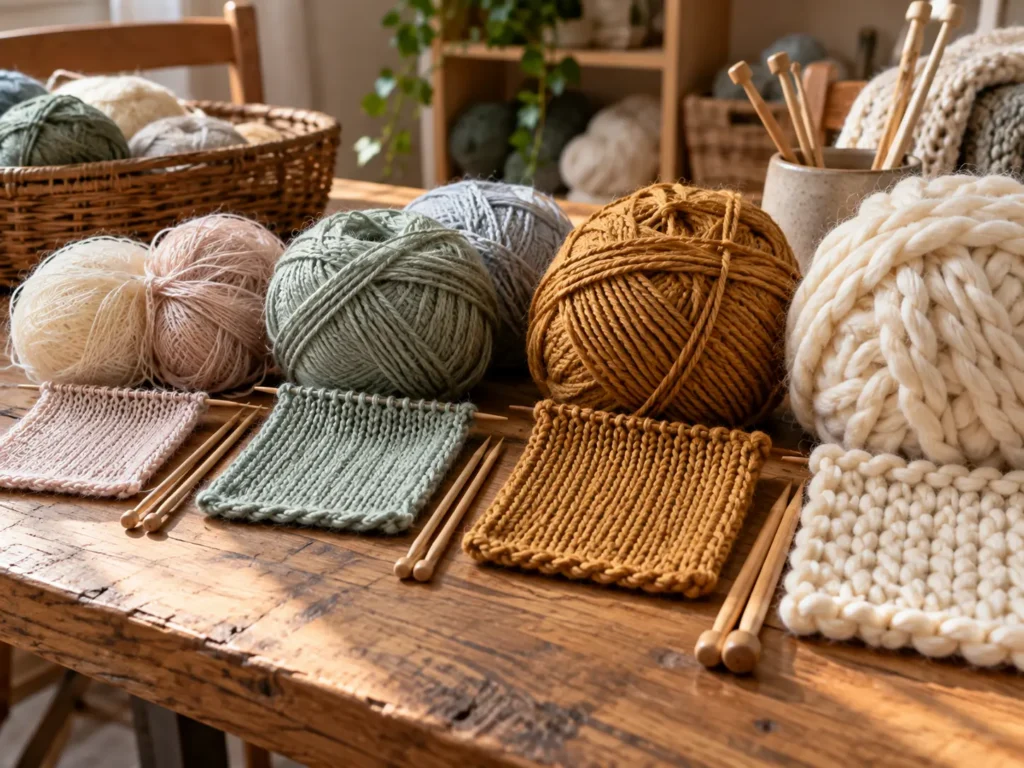
Yarn choice can significantly affect the appearance, weight, warmth, and drape of a sweater.
Two patterns with the same measurements can look completely different when made with different yarns.
Here is a general guide to common yarn weights:
| Yarn Weight | General Character | Common Sweater Use |
|---|---|---|
| Lace | Very fine | Lightweight garments |
| Fingering | Fine | Lightweight sweaters |
| Sport | Light | Spring and lightweight sweaters |
| DK | Medium-light | Versatile sweaters |
| Worsted | Medium | Everyday sweaters |
| Aran | Medium-heavy | Warm sweaters |
| Bulky | Thick | Cozy winter sweaters |
| Super Bulky | Very thick | Heavy, quick projects |
The exact yarn weight is only a starting point. Always follow the yarn weight and gauge recommended by your specific pattern.
Understanding Sweater Measurements
One of the most important parts of choosing a sweater pattern is understanding the measurements.
Do not select a size based only on small, medium, large, or extra large. Different patterns can use different sizing systems.
Instead, look at the finished measurements.
Important sweater measurements
| Measurement | What It Tells You |
|---|---|
| Finished bust/chest | Width around the garment |
| Body length | Length from shoulder or neckline to hem |
| Sleeve length | Length of the sleeves |
| Upper arm | Sleeve width around the upper arm |
| Shoulder width | Overall shoulder measurement |
| Neck opening | Size of the neckline |
Take your own measurements and compare them with the finished measurements provided by the pattern.
What Is Ease in a Sweater?
Ease is the difference between your body measurements and the finished measurements of the garment.
For example, imagine your actual chest measurement is 36 inches and a sweater has a finished chest measurement of 40 inches.
That gives you approximately:
40 − 36 = 4 inches of positive ease
The sweater would therefore have 4 inches of additional room around the chest.
Different sweater styles can use different amounts of ease.
| Fit | General Description |
|---|---|
| Close fitting | Little additional room |
| Regular fit | Moderate additional room |
| Relaxed fit | More room for movement |
| Oversized | Significantly more room |
The correct amount of ease depends on the pattern, design, and the fit you want.
Why Gauge Matters for Sweater Knitting
Gauge is especially important when knitting sweaters because a small difference in gauge can create a significant difference in the finished size.
Suppose a pattern specifies:
20 stitches = 4 inches
If your knitting produces fewer stitches across the same 4-inch measurement, your stitches are larger and the finished sweater may become wider than expected.
If your knitting produces more stitches, the finished sweater may become smaller.
Always check:
- Stitch gauge
- Row gauge
- Yarn weight
- Needle size
- Swatch dimensions
A gauge swatch is not just an extra step. It is one of the best ways to check whether your chosen yarn and needles are producing the fabric required by the pattern.
How to Choose the Right Knit Sweater Pattern
Before starting a sweater, ask yourself a few simple questions.
1. What is my skill level?
Choose a project that introduces only a reasonable number of new techniques.
2. What type of sweater do I want?
Decide whether you prefer:
- Pullover
- Cardigan
- Oversized sweater
- Fitted sweater
- Cropped sweater
- Long sweater
- Textured sweater
- Colorwork sweater
3. What yarn do I already have?
If you already own yarn, check its weight, fiber content, yardage, and recommended needle size.
4. How much time do I have?
A bulky sweater may progress faster than a lightweight sweater, while detailed colorwork or cables may require more concentration.
5. Do I understand the construction?
Check whether the sweater is:
- Top-down
- Bottom-up
- Seamless
- Seamed
- Knitted flat
- Knitted in the round
Top-Down vs. Bottom-Up Sweaters
Both construction methods can produce excellent sweaters, but they offer different experiences.
| Feature | Top-Down | Bottom-Up |
|---|---|---|
| Starting point | Neckline | Hem |
| Direction | Downward | Upward |
| Try on during knitting | Often easier | Less convenient |
| Seaming | Often minimal | May require more |
| Sleeve construction | Usually later | Often separately |
| Best for | Adjustable projects | Traditional construction |
Neither method is automatically better. Choose the construction that matches your experience and the instructions of the pattern.
How Much Yarn Do You Need for a Sweater?
The amount of yarn required depends on several factors:
- Sweater size
- Yarn weight
- Sweater length
- Sleeve length
- Gauge
- Construction
- Stitch pattern
- Ease
- Yarn yardage
A larger size generally requires more yarn, but two sweaters of the same size can require different amounts depending on the design.
Example
| Project Type | Relative Yarn Requirement |
|---|---|
| Cropped sweater | Lower |
| Short-sleeve sweater | Lower |
| Standard pullover | Medium |
| Long sweater | Higher |
| Oversized sweater | Higher |
| Cable sweater | Can be higher |
| Colorwork sweater | Varies |
Always use the yardage listed in the specific pattern rather than relying on a generic estimate.
Tips for Your First Sweater
If you have never knitted a sweater before, preparation can make the project much easier.
Read the entire pattern first
Do not begin with the first instruction without looking through the rest of the pattern.
Check the construction, sizing, materials, gauge, abbreviations, and finishing instructions.
Make a gauge swatch
Use the yarn and needles you intend to use for the sweater.
Choose your size carefully
Compare your measurements with the finished garment measurements.
Keep track of your rows
A simple row counter or written notes can help prevent confusion.
Mark important sections
Use stitch markers to identify important sections, especially when working increases, decreases, or repeated motifs.
Check your stitch count
After shaping sections, count your stitches before continuing.
Take your time
Sweaters are larger projects than scarves or hats. It is normal for them to take longer.
Common Mistakes When Knitting a Sweater
Choosing a Size Based Only on Clothing Labels
A medium in one pattern does not necessarily have the same finished measurements as a medium in another.
Always use the measurements provided by the pattern.
Skipping the Gauge Swatch
Even if your yarn label recommends a particular needle size, that does not guarantee that you will achieve the pattern’s gauge.
Buying Too Little Yarn
Check the total yardage required for your size before starting.
If possible, buy enough yarn from the same dye lot when the yarn is dyed in batches.
Ignoring Ease
A sweater can technically fit your measurements while still being much tighter or looser than intended.
Consider the finished garment measurements and the intended fit.
Changing Yarn Without Checking Gauge
Substituting yarn is possible, but you should compare weight, fiber, yardage, and gauge before making the switch.
Knit Sweater Patterns by Skill Level
If you are unsure which project to choose, this simple breakdown can help.
| Skill Level | Good Pattern Types |
|---|---|
| Beginner | Simple pullover, basic crewneck |
| Beginner–Intermediate | Raglan, simple cardigan |
| Intermediate | Top-down sweater, textured sweater |
| Intermediate–Advanced | Cable sweater, detailed cardigan |
| Advanced | Complex colorwork, intricate construction |
Remember that skill levels can vary between designers. A pattern marked “intermediate” may be easier for one knitter and more challenging for another.
How to Start Your First Knit Sweater
Once you have selected a pattern, prepare everything before casting on.
Step 1: Read the pattern
Understand the construction and instructions.
Step 2: Take your measurements
Record your chest, body, sleeve, and other relevant measurements.
Step 3: Choose your size
Compare your measurements with the finished measurements.
Step 4: Choose your yarn
Make sure the yarn works with the required gauge.
Step 5: Make your gauge swatch
Measure the swatch accurately.
Step 6: Adjust your needle size if necessary
If your gauge does not match the pattern, changing needle size may help you reach the required gauge.
Step 7: Prepare your tools
You may need:
- Knitting needles
- Circular needles
- Stitch markers
- Tapestry needle
- Measuring tape
- Scissors
- Row counter
- Cable needle, if required
- Stitch holders or scrap yarn
Step 8: Start knitting
Follow the pattern one section at a time and check your stitch counts regularly.
Final Thoughts
Choosing the right sweater project can make the difference between an enjoyable knitting experience and a frustrating one. Start by considering your skill level, the construction of the sweater, the yarn weight, your measurements, and the amount of ease you want.
There are knit sweater patterns for almost every style and skill level, from simple pullovers and classic crewnecks to textured designs, cardigans, cables, and colorwork.
If you are new to sweater knitting, start with a straightforward design and focus on getting your gauge and measurements right. Once you become more comfortable with sweater construction, you can gradually experiment with more detailed designs and techniques.
And if you are still building your knitting skills, explore our Knitting Patterns collection for more project ideas.
FAQ
What is the easiest sweater to knit for a beginner?
A simple pullover with basic shaping, a straightforward neckline, and minimal decorative techniques is generally a manageable starting point. Choose a pattern with clear instructions and a yarn weight that you are comfortable working with.
How much yarn do I need to knit a sweater?
The amount depends on the sweater size, yarn weight, gauge, design, length, and amount of ease. Always use the yardage listed by the specific pattern for your selected size.
What yarn weight is best for sweaters?
DK, worsted, and aran-weight yarns are common choices for sweaters, but the best yarn depends on the pattern, desired fabric, season, and construction.
Is knitting a sweater difficult?
A sweater requires more planning than a small project, but you do not need to start with a complicated design. A simple pattern can help you learn sweater construction gradually.
Should I make a gauge swatch before knitting a sweater?
Yes. Gauge is particularly important for garments because differences in stitch gauge can significantly change the finished measurements.
Can beginners knit sweaters?
Yes. Beginners can start with a simple sweater pattern designed with straightforward construction and clear instructions. It is helpful to understand basic knitting skills and pattern terminology first.