15 Free Knit Hat Patterns for Beginners and Beyond

A knitted hat is one of the most practical projects you can make with a pair of knitting needles. It is small enough to be manageable, but it also gives you the opportunity to practice important skills such as ribbing, knitting in the round, decreases, shaping, and working with different yarn weights.
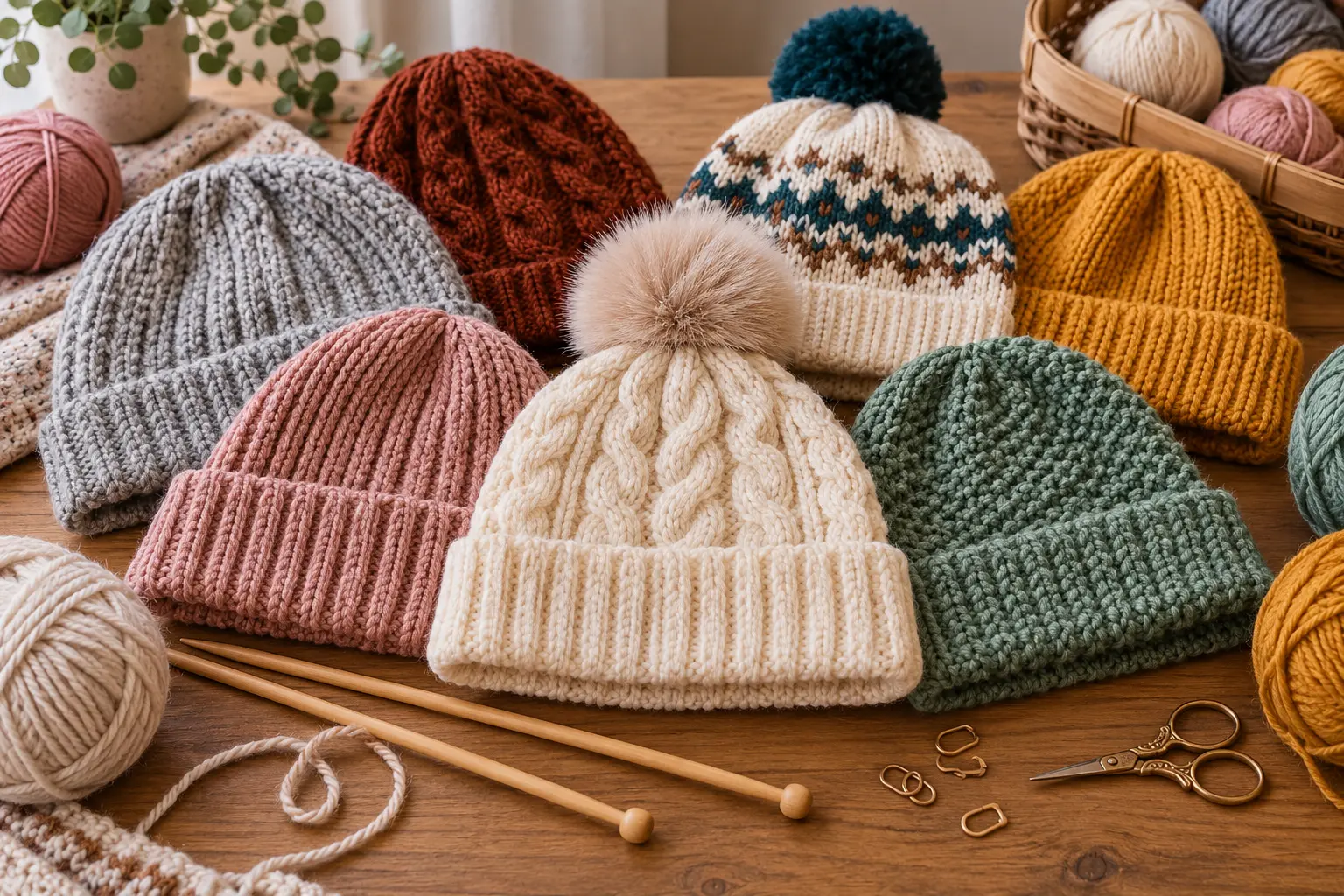
Whether you are looking for a simple first project or want to try a more detailed design, there are plenty of free knit hat patterns to explore. You can make a warm winter beanie with bulky yarn, a classic ribbed hat with worsted or DK yarn, or a textured hat using cables and decorative stitches.
The best part is that hats require much less yarn and time than larger projects such as sweaters or blankets. This makes them a useful way to practice new techniques without committing to a very large project.
In this guide, you will find 15 knit hat ideas for different skill levels, along with practical information about yarn, sizing, gauge, construction, and choosing the right pattern.
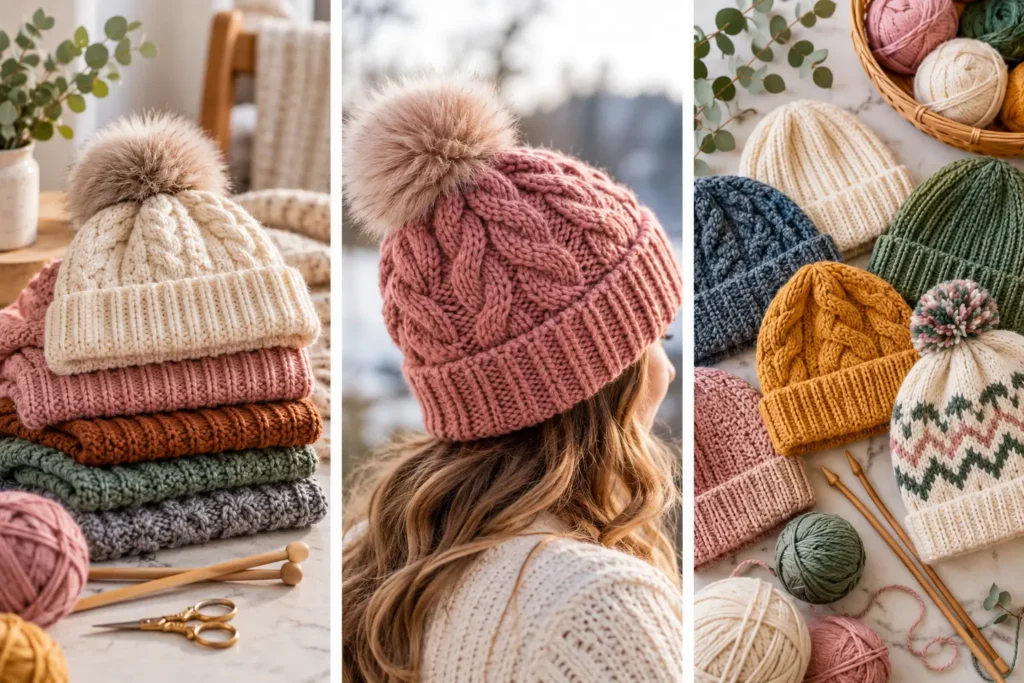
Why Knit a Hat?
Knitted hats are excellent projects for both beginners and experienced knitters because they combine a relatively small amount of knitting with useful garment-making techniques.
A hat can help you practice:
- Casting on
- Knit and purl stitches
- Ribbing
- Knitting in the round
- Decreasing
- Reading knitting patterns
- Checking gauge
- Working with different yarn weights
- Finishing and weaving in ends
A simple hat can also be completed much faster than a sweater, making it a satisfying short-term project.
15 Free Knit Hat Patterns to Try
1. Simple Ribbed Knit Hat
A simple ribbed hat is one of the easiest styles to start with.
The body of the hat is usually worked in a basic rib stitch, creating a stretchy fabric that fits comfortably around the head. A 1×1 or 2×2 rib is particularly common.
For a first hat, look for a pattern with straightforward shaping and clear instructions.
Good for: Beginners
Typical yarn: DK, worsted, or aran
Main skill: Ribbing
A basic 2×2 rib alternates knit two stitches and purl two stitches throughout the round or row.
2. Classic Knit Beanie
A classic beanie is a versatile project that can be adapted to many yarn weights and styles.
Most basic beanies have a ribbed brim followed by a simple knitted body. The crown is then shaped with gradual decreases until only a small number of stitches remain.
A plain beanie is particularly useful when you want to focus on learning hat construction rather than complicated stitch patterns.
Good for: Beginner to intermediate knitters
Typical yarn: DK, worsted, or aran
Construction: Often worked from the brim toward the crown
3. Chunky Knit Hat
A chunky knit hat can be a good choice when you want a warm project that progresses relatively quickly.
Thicker yarn generally requires fewer stitches to reach the finished circumference, although the exact stitch count depends on the pattern and gauge.
Recommended yarn: Bulky or super bulky
Keep in mind that thicker yarn can also create a heavier fabric, so consider the finished weight and drape before choosing your yarn.
4. Slouchy Knit Hat
A slouchy hat has additional fabric around the crown, creating a relaxed shape that sits farther back on the head.
The main difference from a fitted beanie is usually the finished height and crown shaping.
When choosing a slouchy pattern, pay attention to the finished measurements rather than simply choosing a larger size.
| Measurement | Why It Matters |
|---|---|
| Head circumference | Determines hat width |
| Finished height | Controls the amount of slouch |
| Brim height | Affects fit and appearance |
| Crown shaping | Determines the final silhouette |
5. Cuffed Knit Hat
A cuffed hat has a folded or extended brim that provides additional coverage around the ears.
The brim is often made with ribbing because ribbed fabric stretches and helps the hat stay comfortably in place.
Good for: Beginners to intermediate knitters
Popular stitch: 1×1 or 2×2 ribbing
A cuffed design can be especially useful for a warm winter hat.
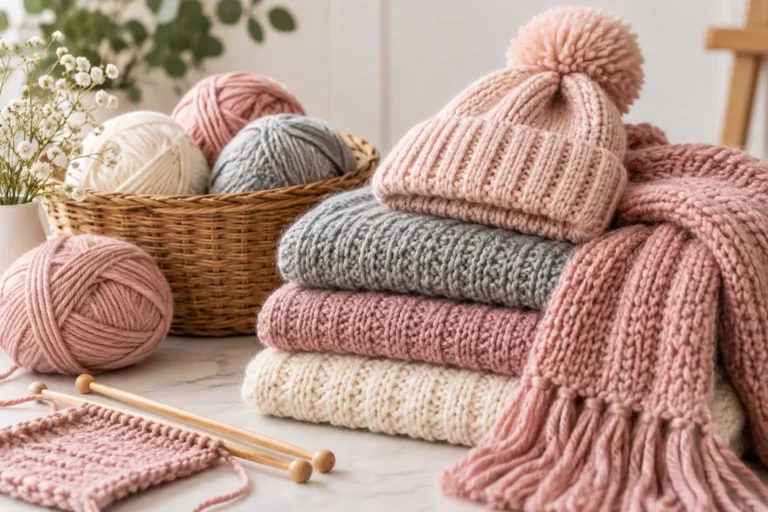
6. Pom-Pom Knit Hat
A pom-pom can turn a simple knitted beanie into a fun winter accessory.
The hat itself does not need to have a complicated stitch pattern. A basic ribbed or stockinette beanie can become a pom-pom hat by adding a decorative pom-pom after finishing.
You can use a matching color or choose a contrasting shade for a different look.
7. Seed Stitch Knit Hat
Seed stitch creates a small textured surface by alternating knit and purl stitches.
The result is a subtle texture that can make a simple hat look more detailed without requiring cables or color changes.
Seed stitch can also be useful for practicing how knit and purl stitches work together.
Good for: Beginner to intermediate knitters
Texture: Small, even bumps
Best for: Simple textured accessories
8. Garter Stitch Knit Hat
Garter stitch is another simple way to add texture to a knitted project.
When working flat, garter stitch is created by knitting every row. When working in the round, however, the stitch pattern needs to be approached differently because knitting every round creates stockinette stitch.
A simple garter-based hat can therefore be a useful project for understanding how construction affects stitch patterns.
9. Cable Knit Hat
Cable hats are a popular choice for knitters who want more texture and visual detail.
Cables are created by crossing stitches over one another. Although cable patterns may look complicated, simple cable repeats can become easier with practice.
A cable hat can help you learn:
- Reading cable charts
- Holding stitches temporarily
- Crossing stitches
- Following repeated motifs
- Maintaining stitch counts
Recommended for: Intermediate knitters
If you are new to cables, start with a pattern that uses one simple repeating cable rather than several complicated motifs.
10. Fisherman-Style Ribbed Hat
Fisherman-style ribbing creates a thick and highly textured fabric.
This can produce a warm hat with plenty of stretch, making it a popular choice for cold-weather accessories.
Because textured ribbing can use more yarn than a simple stockinette fabric, check the recommended yardage before starting.
Good for: Intermediate knitters
Main feature: Thick, stretchy texture
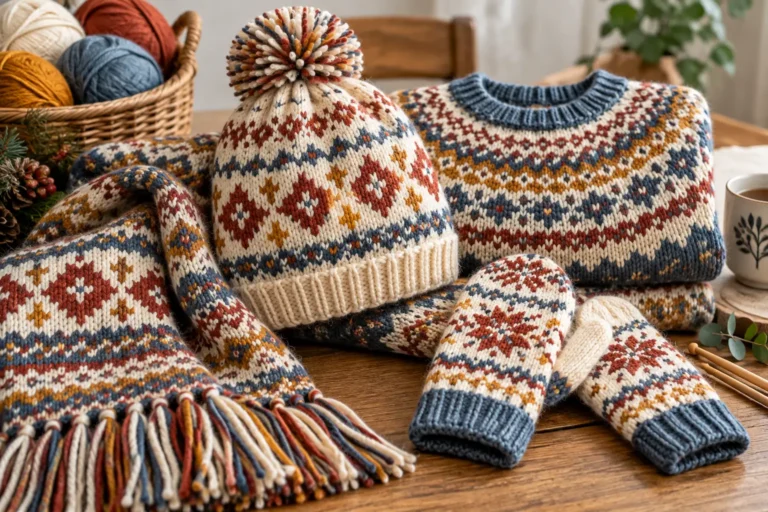
11. Colorwork Knit Hat
Colorwork allows you to combine two or more yarn colors to create decorative patterns.
A hat can be a useful project for trying colorwork because it is considerably smaller than a full sweater.
For a first colorwork project, look for simple stripes or a small repeating motif.
Common colorwork ideas include:
- Stripes
- Geometric patterns
- Simple motifs
- Two-color borders
- Repeating designs
When working with multiple colors, maintain consistent tension so the fabric remains comfortable and flexible.
12. Fair Isle-Style Knit Hat
Fair Isle-style designs use stranded colorwork to create repeating motifs.
These hats can introduce more advanced chart reading and color management. When carrying unused yarn across the back of the work, avoid making the floats too tight because the fabric still needs to stretch comfortably.
Recommended for: Intermediate to advanced knitters
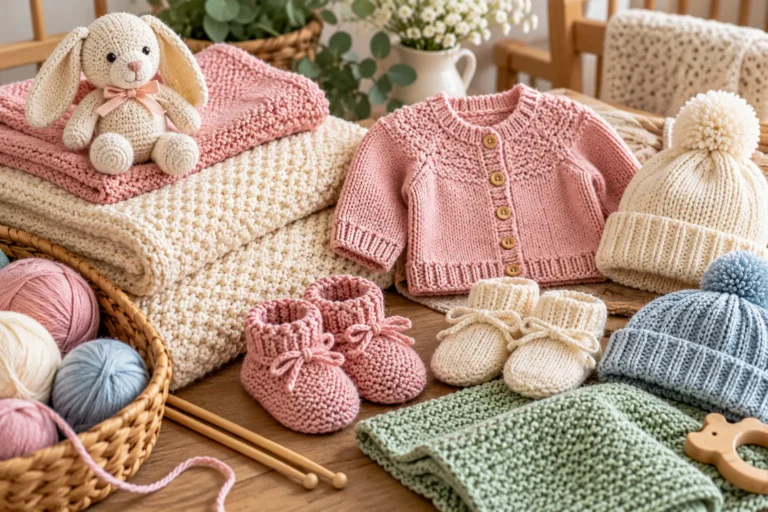
13. Baby and Toddler Knit Hat
Small hats can be quick projects and are useful for practicing sizing and shaping.
Sizing is particularly important for baby and toddler hats. Instead of relying only on age, use the finished measurements and head-circumference information provided by the pattern.
For these projects, consider:
- Soft yarn
- Comfortable fabric
- Appropriate sizing
- Secure finishing
- Simple construction
14. Earflap Knit Hat
An earflap hat provides additional coverage around the ears and sides of the head.
This style can combine a simple knitted hat body with shaped earflaps and optional ties.
Because the earflaps involve additional shaping, this can be a useful project for knitters who already understand basic increases and decreases.
Good for: Intermediate knitters
Main feature: Additional ear coverage
15. Beginner-Friendly Knit Hat
If you are completely new to hat knitting, start with a simple design rather than a complicated cable or colorwork project.
Look for a pattern with:
- Basic knit and purl stitches
- Simple ribbing
- Straightforward crown decreases
- Clear sizing
- A manageable yarn weight
- Minimal finishing
- Easy-to-follow instructions
A basic hat can teach several skills that will become useful when you move on to larger projects.
If you are still learning the fundamentals, see our guide to 7 Easy Knitting Patterns for Beginners.
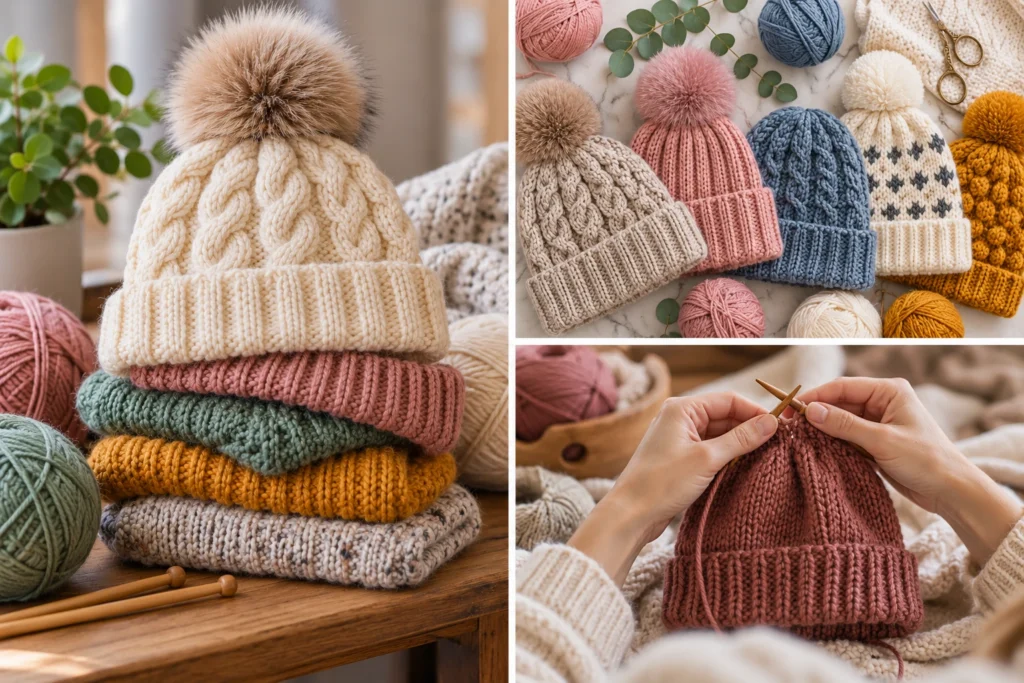
Choosing Yarn for a Knit Hat
The yarn you choose affects the warmth, stretch, texture, and appearance of the finished hat.
Here is a general guide to common yarn weights:
| Yarn Weight | Typical Hat Characteristics |
|---|---|
| Fingering | Lightweight and detailed |
| Sport | Light and comfortable |
| DK | Versatile and balanced |
| Worsted | Warm and practical |
| Aran | Warm with more structure |
| Bulky | Thick and cozy |
| Super Bulky | Very thick and quick to knit |
For a first hat, DK, worsted, or aran-weight yarn can be easier to handle than very fine yarn.
However, always check the specific pattern because the recommended yarn weight and gauge will determine the final size and fabric.
How Much Yarn Do You Need?
Most hats require considerably less yarn than sweaters, but the exact amount depends on the project.
Factors that affect yarn usage include:
- Hat size
- Yarn weight
- Finished height
- Stitch pattern
- Brim style
- Gauge
- Colorwork
- Texture
| Hat Style | Relative Yarn Use |
|---|---|
| Simple beanie | Low |
| Ribbed hat | Low to medium |
| Slouchy hat | Medium |
| Cable hat | Medium |
| Colorwork hat | Medium |
| Large slouchy hat | Medium to high |
Always use the yardage specified by the pattern when possible.
Understanding Hat Size and Measurements
Before choosing a size, measure the head of the intended wearer.
A knitted hat usually needs some negative ease so that it can stretch around the head and stay in place. The exact amount depends on the yarn, stitch pattern, and design.
Important measurements include:
| Measurement | Purpose |
|---|---|
| Head circumference | Determines hat width |
| Finished circumference | Shows the actual hat size |
| Hat height | Determines how far the hat extends |
| Brim height | Affects fit and ear coverage |
| Crown length | Affects the final shape |
Do not select a size based only on a general label such as small, medium, or large.
What Is Negative Ease?
Negative ease means that the finished circumference of the hat is slightly smaller than the wearer’s head circumference.
For example, if the head circumference is 22 inches and the finished hat circumference is 20 inches, the hat has approximately 2 inches of negative ease.
This allows the knitted fabric to stretch around the head.
The ideal amount varies depending on the yarn and stitch pattern. Ribbing, for example, is naturally more elastic than a fabric with little stretch.
Why Gauge Matters
Gauge is especially important for knitted hats because even a small difference can change the finished circumference.
For example, if a pattern requires:
18 stitches = 4 inches
but your knitting produces fewer stitches across the same measurement, your stitches are larger and the finished hat may be wider.
If you produce more stitches, the finished hat may be smaller.
Before starting, check:
- Stitch gauge
- Row or round gauge
- Yarn weight
- Needle size
- Finished measurements
If you are substituting yarn, making a gauge swatch becomes even more useful.
Choosing the Right Knitting Method
Many hats are knitted in the round, but there are several ways to construct one.
Circular Needles
Circular needles are commonly used for the main body of a hat.
Double-Pointed Needles
Double-pointed needles can be useful when the circumference becomes too small for a standard circular needle.
Magic Loop
Magic loop uses a longer circular needle to knit small circumferences.
Straight Needles
Some hat patterns are knitted flat and then seamed together.
The best method depends on the pattern and the techniques you are already comfortable using.
How a Basic Knit Hat Is Constructed
A simple bottom-up hat usually follows this general sequence:
- Choose the size based on head circumference and finished measurements.
- Choose the yarn according to the pattern requirements.
- Make a gauge swatch if needed.
- Cast on the required number of stitches.
- Work the brim, often using ribbing.
- Knit the main body until the required height.
- Begin crown decreases according to the pattern.
- Close the remaining stitches at the top.
- Weave in the yarn ends.
- Block the hat if appropriate for the yarn and stitch pattern.
The crown is typically shaped with evenly distributed decreases. The exact decrease sequence varies by pattern and affects the final crown shape.
Tips for Choosing Free Knit Hat Patterns
Not every free pattern provides the same level of information.
Before starting a pattern, check that it includes:
- Finished measurements
- Yarn weight
- Recommended yardage
- Needle size
- Gauge
- Skill level
- Clear instructions
- Abbreviations
- Construction method
- Finishing instructions
A good pattern should give you enough information to understand what you need before casting on.
Also check whether the pattern comes from the original designer and read its usage terms if you plan to sell finished items.
Common Hat Knitting Mistakes
Choosing the Wrong Size
A small, medium, or large label is not enough by itself. Compare the actual finished measurements with the wearer’s head measurement.
Skipping Gauge
Different yarns and needles can produce different stitch sizes, which can change the finished hat circumference.
Making the Hat Too Long
The body length and crown length both affect the final fit. Measure your work as you go.
Making the Brim Too Tight
A hat brim needs enough stretch to fit comfortably around the head.
Losing Track of Crown Decreases
Crown shaping often uses repeated decrease rounds. Stitch markers and a row counter can make these sections easier to follow.
Using the Wrong Yarn Weight
A pattern designed for bulky yarn will not necessarily produce the same result when made with fingering or DK yarn.
Free vs. Paid Knitting Patterns
Free and paid patterns can both be useful.
A free pattern can be a good way to learn a new technique or try a particular construction without purchasing a pattern.
Paid patterns may sometimes include additional sizes, detailed instructions, charts, tutorials, or more extensive formatting.
Rather than choosing based only on price, check whether the pattern includes the information you actually need.
Knit Hat Ideas by Skill Level
| Skill Level | Pattern Ideas |
|---|---|
| Beginner | Ribbed hat, simple beanie |
| Beginner–Intermediate | Slouchy hat, cuffed hat, seed stitch |
| Intermediate | Cable hat, earflap hat |
| Intermediate–Advanced | Colorwork, Fair Isle-style hat |
| Advanced | Complex cable and colorwork designs |
If you are learning to knit, it is usually easier to master one new technique at a time rather than combining several unfamiliar techniques in one project.
FAQ
What are the easiest free knit hat patterns for beginners?
Simple ribbed hats and basic beanies are good starting points because they usually use fundamental stitches and straightforward crown shaping.
How many stitches do I need to knit a hat?
There is no universal stitch count. It depends on the head circumference, yarn weight, gauge, stitch pattern, and desired ease.
What yarn weight is best for a knit hat?
DK, worsted, and aran-weight yarns are versatile choices, but the best yarn depends on the pattern and the fabric you want.
Should a knitted hat have negative ease?
Many knitted hats use some negative ease so the fabric can stretch around the head. The appropriate amount depends on the yarn and stitch pattern.
Can I knit a hat with straight needles?
Yes. Some patterns are knitted flat and seamed, while many others are designed to be worked in the round.
How long does it take to knit a hat?
It depends on your knitting speed, yarn weight, stitch pattern, and construction. A simple bulky-yarn hat will generally require less knitting than a detailed lightweight design.
Can beginners knit hats?
Yes. A basic hat is a useful beginner project because it introduces ribbing, shaping, gauge, and finishing without requiring a very large project.
Final Thoughts
Knitted hats are small projects with plenty of opportunities to learn. A simple beanie can teach you how to work with ribbing and crown decreases, while more advanced designs can introduce cables, colorwork, textured stitches, and different construction methods.
When choosing between free knit hat patterns, pay attention to the finished measurements, gauge, yarn weight, yardage, needle size, skill level, and construction method.
If you are a beginner, start with a simple ribbed or basic beanie. Once you become comfortable with hat construction, you can experiment with slouchy styles, cables, colorwork, and textured designs.
For more project ideas, explore our Knitting Patterns guide and discover more knitting projects for different skill levels.