15 Free Scarf Knitting Patterns for Beginners and Beyond

A handmade scarf is one of the most versatile projects you can create with knitting needles. It can be a simple first project for a new knitter, a relaxing weekend make, or an opportunity to experiment with interesting stitches, colors, and textures.
If you are looking for free scarf knitting patterns, there are plenty of styles to explore. From classic garter stitch scarves to cozy chunky designs and elegant lace wraps, the right project depends on your skill level, preferred yarn, and the look you want to achieve.
In this guide, we’ll explore 15 scarf styles, explain what makes each one special, and share tips for choosing a pattern that suits your next knitting project. You’ll also find links to collections of free knitting patterns where you can explore available designs and instructions.
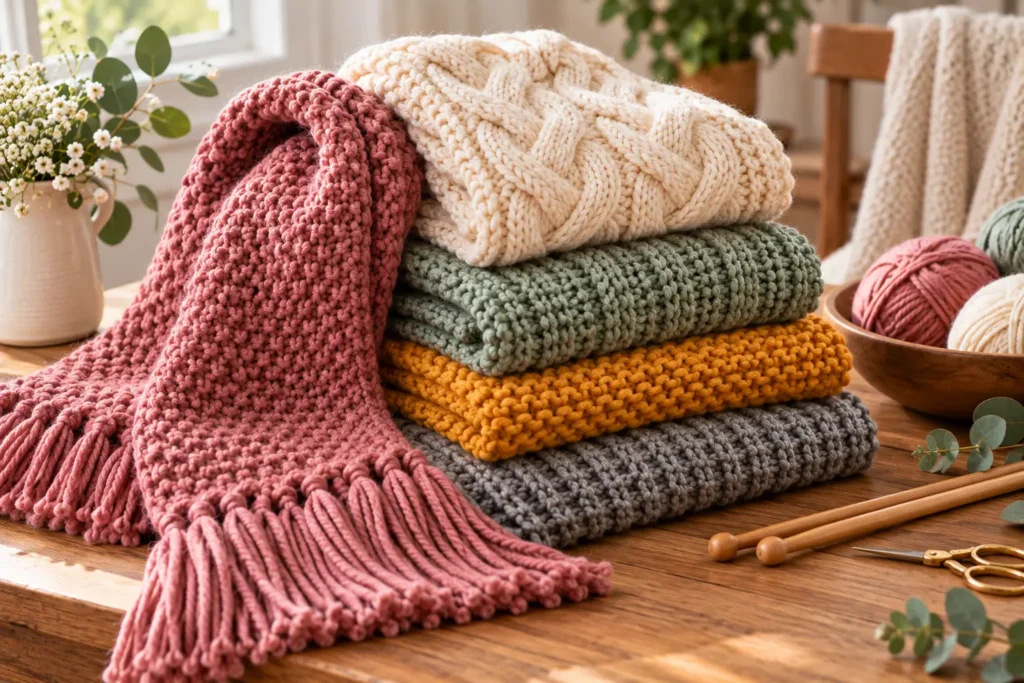
1. Classic Garter Stitch Scarf
A garter stitch scarf is an excellent starting point for beginners. It is made by knitting every stitch on every row, creating a soft, ridged fabric that lies relatively flat and feels comfortable around the neck.
Because the stitch pattern is simple, you can focus on keeping your tension even and learning how to work consistently. A smooth worsted-weight yarn is a practical choice, while a soft wool blend can add warmth.
Skill level: Beginner Best for: First knitting projects Yarn suggestion: Worsted-weight yarn
2. Simple Stockinette Stitch Scarf
A stockinette stitch scarf has a smooth side with visible V-shaped stitches and a reverse side with small horizontal bumps. This classic texture works well with solid colors and lets the yarn itself become part of the design.
Stockinette fabric naturally tends to curl at the edges. Look for a pattern that includes a garter stitch or ribbed border to help create a neater finish.
Skill level: Beginner to easy Best for: Clean, classic designs Yarn suggestion: DK or worsted-weight yarn
3. Ribbed Knit Scarf
Ribbing alternates knit and purl stitches to create vertical columns. A 1×1 rib alternates one knit stitch with one purl stitch, while a 2×2 rib works two knit stitches followed by two purl stitches.
Ribbed scarves are stretchy and reversible-looking, making them useful for everyday wear. They also pair nicely with matching ribbed hats.
Skill level: Beginner to easy Best for: Stretchy scarves with texture Yarn suggestion: Worsted-weight yarn
4. Chunky Knit Scarf
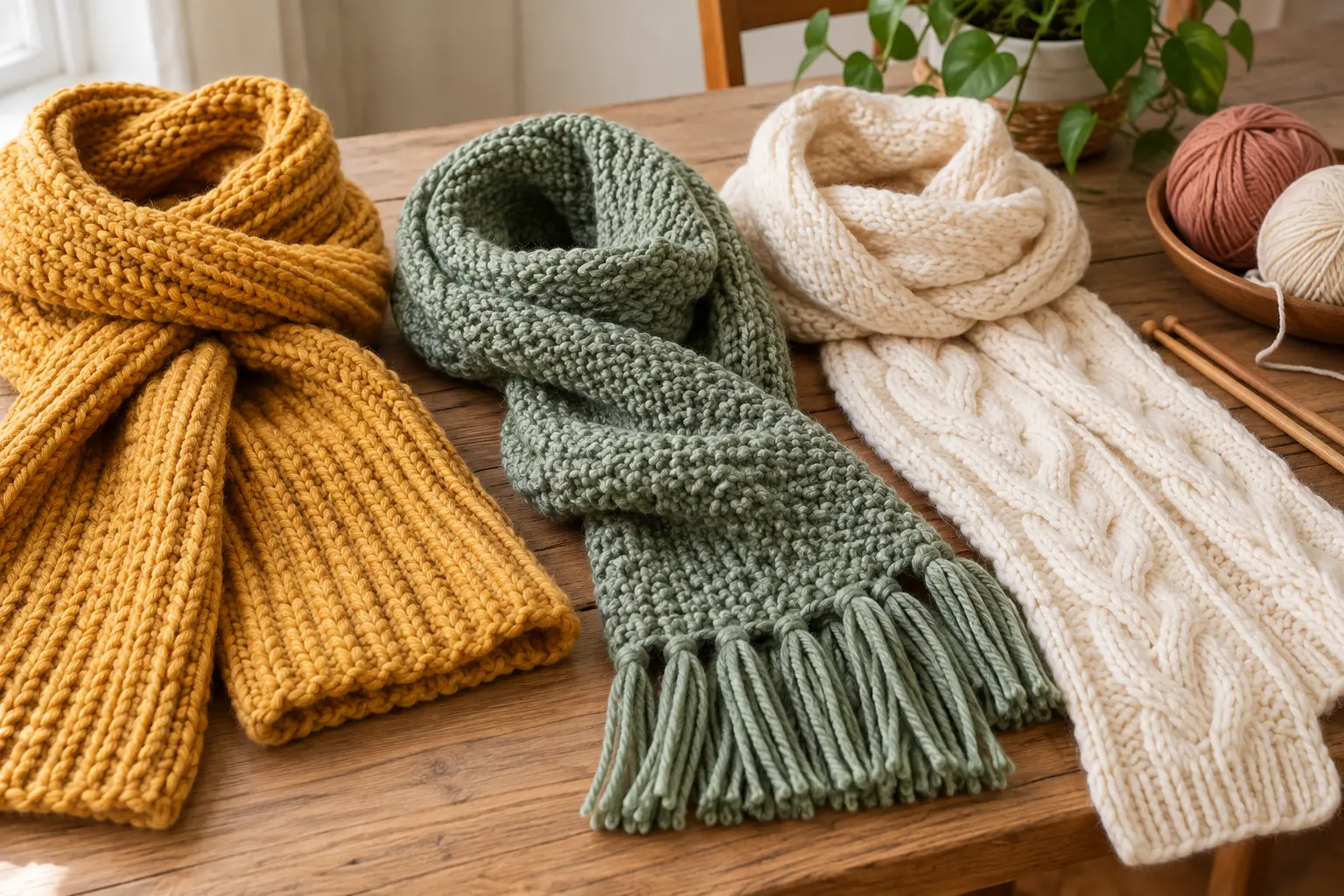
A chunky scarf creates a cozy, substantial accessory using bulky or super bulky yarn. The larger stitches make the fabric grow quickly, which can be satisfying when you want to finish a project without working through many rows.
Choose a yarn that feels comfortable against the skin, especially if the scarf will be worn close to the face. Check the pattern’s recommended needle size and finished dimensions before starting.
Skill level: Beginner to easy Best for: Quick, warm accessories Yarn suggestion: Bulky or super bulky yarn
5. Seed Stitch Scarf
Seed stitch creates a bumpy, pebbled texture by alternating knit and purl stitches. The pattern looks attractive on both sides, making it a useful option for a scarf that may twist or move while being worn.
Although the stitch sequence is repetitive, it helps beginners practise switching between knit and purl stitches while keeping track of their rows.
Skill level: Beginner to easy Best for: Reversible texture Yarn suggestion: DK or worsted-weight yarn
6. Moss Stitch Scarf
Moss stitch produces a small, balanced texture that looks similar to scattered knots across the fabric. Depending on the pattern, the stitch sequence may repeat over two or four rows.
This design works well with simple yarn colors because the texture provides visual interest without requiring stripes or complicated color changes.
Skill level: Easy Best for: Subtle, all-over texture Yarn suggestion: Smooth DK or worsted-weight yarn
7. Striped Knit Scarf
A striped scarf is a great way to combine two or more colors. You can use broad stripes for a bold look, narrow stripes for a more delicate effect, or several shades from the same color family.
When changing colors, leave yarn tails long enough to weave in neatly. If you are new to color changes, choose a pattern with simple horizontal stripes rather than complicated colorwork.
Skill level: Beginner to easy Best for: Colorful, personalized accessories Yarn suggestion: DK or worsted-weight yarn in two or more colors
8. Beginner Ribbed Scarf with a Fringe
A ribbed scarf with fringe combines a simple stitch pattern with a decorative finish. The fringe can be made from short lengths of matching yarn attached to each end after the scarf is complete.
This is a useful way to personalize a basic scarf without adding complicated knitting techniques. Keep the fringe lengths consistent for a tidy appearance.
Skill level: Beginner to easy Best for: Classic scarves with a decorative edge Yarn suggestion: Worsted-weight yarn
9. Basketweave Scarf
Basketweave stitch creates blocks of knit and purl texture that resemble a woven basket. The pattern usually alternates sections of stitches to form a grid-like surface.
This design looks especially effective in solid or gently heathered yarn, where the raised and recessed areas are easy to see. Because it involves repeated stitch blocks, a row counter can help you stay on track.
Skill level: Easy to intermediate Best for: Textured, structured scarves Yarn suggestion: Worsted-weight yarn
10. Cable Knit Scarf
Cable knitting creates twisting patterns that stand out from the background fabric. A scarf with a central cable can look traditional and detailed, while smaller cables create a more subtle effect.
Most cable patterns require moving stitches out of their usual order, often with the help of a cable needle. Beginners can start with a simple cable repeat before trying more complex designs.
Skill level: Intermediate Best for: Raised, decorative patterns Yarn suggestion: Smooth worsted-weight yarn
11. Drop Stitch Scarf
Drop stitch designs use deliberate yarn overs or elongated stitches to create an open, airy fabric. The result can look delicate while using a relatively simple repeating sequence.
Follow the pattern carefully so you know which stitches are meant to be elongated. A smooth yarn makes it easier to see the structure and keep the open sections consistent.
Skill level: Easy to intermediate Best for: Lightweight scarves with an open texture Yarn suggestion: DK or worsted-weight yarn, depending on the pattern
12. Lace Knit Scarf
Lace knitting uses combinations of yarn overs and decreases to create decorative holes and motifs. A lace scarf can look elegant and lightweight, making it suitable for layering in mild weather.
Lace patterns often require more attention than basic knit-and-purl projects. Stitch markers and a row counter can help you keep track of each repeat.
Skill level: Intermediate Best for: Lightweight, decorative accessories Yarn suggestion: Fingering or sport-weight yarn
13. Color-Block Scarf
A color-block scarf uses larger sections of contrasting or complementary colors. Unlike narrow stripes, each color section may be several inches long, creating a modern, graphic appearance.
This is a good project for using leftover yarn, provided the yarns have similar weights and care requirements. Plan the color sequence before starting to make sure the finished scarf has a balanced look.
Skill level: Beginner to easy Best for: Modern, bold color combinations Yarn suggestion: DK or worsted-weight yarn
14. Hooded Knit Scarf
A hooded scarf combines a long scarf with a hood, offering extra coverage in cold weather. Some patterns make the hood and scarf as one piece, while others require separate pieces to be joined.
Because this project is larger than a standard scarf, check the finished measurements and yarn requirements before choosing a pattern. A simple stitch can keep the construction manageable.
Skill level: Easy to intermediate Best for: Cold-weather accessories Yarn suggestion: Worsted or bulky yarn, as specified by the pattern
15. Triangle Scarf or Bandana
A triangle scarf is a versatile accessory that can be worn around the neck or styled as a small bandana. Depending on the design, it may be worked from the top down, from one tip, or from the widest edge.
Smaller triangle scarves can use less yarn than a full-length wrap, making them a useful option when you want a compact project. Look for a pattern that clearly explains its increases, decreases, and finished measurements.
Skill level: Beginner to intermediate, depending on the pattern Best for: Lightweight, versatile accessories Yarn suggestion: Fingering, sport, or DK yarn
Where to Find Free Scarf Knitting Patterns
Once you have chosen a style, look for a pattern with clear instructions, a stated skill level, and enough information to estimate the finished size and yarn quantity.
Here are three places to explore:
- Yarnspirations – Free Scarf Knitting Patterns : A collection specifically filtered for knitted scarf patterns. Check each listing for its current availability and details.
Yarnspirations
- Purl Soho – Free Knitting Patterns : A large collection that includes scarves, wraps, hats, and other knitting projects.
purlsoho.com
- Lion Brand – Beginner Knit Scarf : A beginner-level scarf project with listed dimensions, yarn weight, and gauge information. Check the page for the current pattern access process.
Lion Brand Yarn
Always check whether a pattern is free to access, whether registration is required, and whether the instructions are available in a format you can use.
How to Choose the Right Scarf Knitting Pattern
With so many scarf styles available, it helps to compare a few practical details before casting on.
Consider Your Skill Level
If you are new to knitting, start with a pattern that mainly uses knit stitches or a simple knit-and-purl repeat. Garter stitch, basic ribbing, and uncomplicated stripes are useful options.
If you already feel comfortable with stitch patterns and reading instructions, you may enjoy trying cables, lace, or more detailed textures.
Choose the Right Yarn Weight
Yarn weight affects the thickness, drape, and overall feel of a scarf. Always follow the yarn weight and needle recommendations in the pattern, unless you are comfortable adjusting the project.
| Yarn weight | What it can offer |
|---|---|
| Fingering | Fine, lightweight fabric |
| Sport | Light fabric with a little more substance |
| DK | Versatile, medium-light scarf |
| Worsted | A classic everyday scarf |
| Bulky | Thick, warm fabric |
| Super bulky | Very thick, quick-growing fabric |
The finished result also depends on the fibre, needle size, stitch pattern, and your personal knitting tension.
Check the Finished Measurements
Before starting, check the pattern’s finished width and length. A narrow scarf may be comfortable for a simple wrap, while a wider scarf can provide more coverage and styling options.
If you want to change the dimensions, remember that increasing the width will usually require more stitches and more yarn. Adjusting the length will also change the amount of yarn needed.
Look at the Stitch Pattern
Think about how much attention you want to give the project. A simple repeating pattern is easy to pick up again after a break, while lace and cables may require you to follow a chart or written instructions more closely.
If you are unsure how to interpret the pattern, read our guide on How to Read a Knitting Pattern for Beginners .
How Much Yarn Do You Need for a Knitted Scarf?
The amount of yarn depends on the scarf’s dimensions, the yarn weight, the stitch pattern, and your knitting tension. A short, narrow scarf generally needs less yarn than a wide, long wrap.
Use the yardage listed in your chosen pattern as your starting point. If you are planning to make the scarf longer or wider, buy enough yarn from the same dye lot when possible. This can help keep the color consistent across the finished project.
Making a gauge swatch is particularly useful if you plan to change the yarn or needle size. It helps you estimate how your fabric will behave compared with the pattern.
Tips for Knitting a Scarf
A few simple habits can make your scarf project easier and help you achieve a neat finish.
- Use stitch markers when helpful. They can mark pattern repeats or help you keep track of sections.
- Count your stitches regularly. Catching a mistake early is usually easier than fixing it several rows later.
- Keep your tension consistent. Try to make your stitches even without pulling the yarn too tightly.
- Follow the pattern’s gauge. This is especially important if you want the finished scarf to match the listed dimensions.
- Choose a comfortable yarn. A scarf sits close to the neck, so softness and care instructions matter.
- Finish the edges neatly. Weave in yarn tails securely and block the scarf if the pattern recommends it.
If you are still building your skills, explore our 7 Easy Knitting Patterns for Beginners for more approachable project ideas.
Frequently Asked Questions
What is the easiest scarf to knit for a beginner?
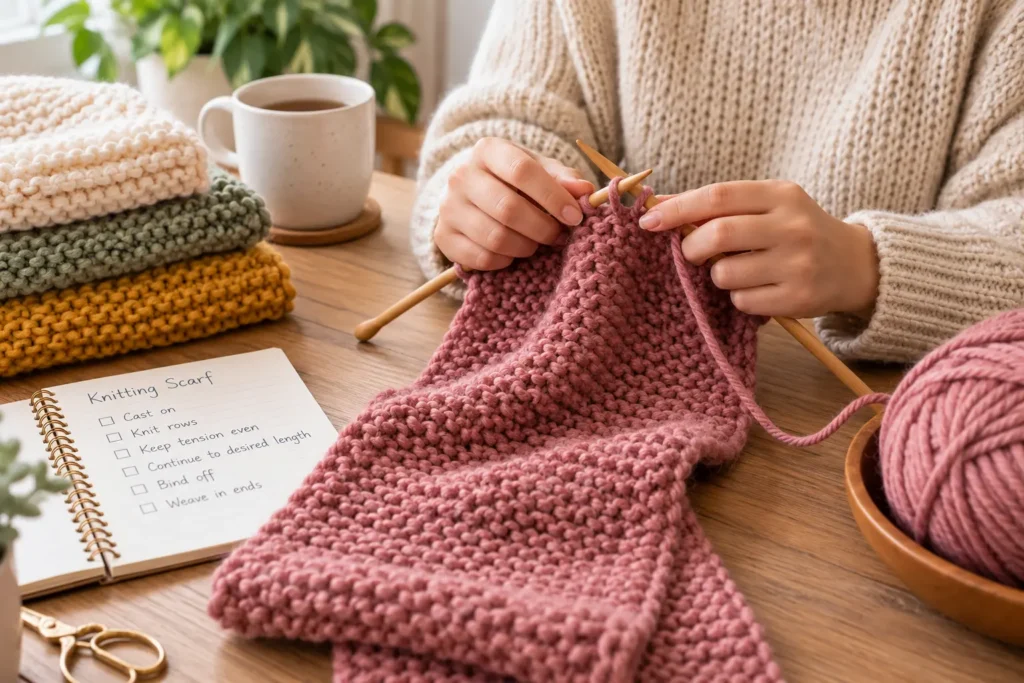
A garter stitch scarf is one of the simplest options because it uses the knit stitch on every row. It lets beginners practise casting on, knitting, maintaining tension, and binding off without needing to learn a complicated stitch repeat.
How wide should a knitted scarf be?
There is no single required width. The right measurement depends on the style, the person wearing it, and how the scarf will be wrapped. Check the finished dimensions in your chosen pattern and adjust only if you understand how the change affects stitch count and yarn requirements.
Can I knit a scarf with leftover yarn?
Yes, provided the yarns are compatible in weight, texture, and care requirements. You can use different colors for stripes or color blocks. If the yarns vary significantly, the fabric may have uneven thickness or drape.
Are free scarf knitting patterns suitable for beginners?
Many free patterns are designed for beginners, but not all of them are simple. Check the stated skill level, abbreviations, stitch pattern, and instructions before starting. If you are learning, choose a pattern with clear written directions and a straightforward repeat.
What knitting needles should I use for a scarf?
Use the needle size recommended by the pattern and yarn label as a starting point. The right size also depends on your knitting tension and the fabric you want. Make a gauge swatch if the finished dimensions are important.
How do I stop the edges of my scarf from curling?
Some stitch patterns, especially stockinette stitch, naturally curl at the edges. Choose a pattern with a garter stitch, ribbed, or other suitable border. Blocking may help some fabrics lie flatter, but it will not eliminate every type of curling.
Final Thoughts
Finding the right free scarf knitting patterns is about more than choosing a pretty design. Consider your skill level, the yarn you have, the finished measurements, and how much time you want to spend on the project.
A simple garter stitch scarf can be a satisfying first project, while ribbing, cables, lace, and colorwork offer ways to explore new techniques. Start with a pattern that feels manageable, follow its instructions carefully, and enjoy making something you can wear or give as a handmade gift.
For more project inspiration, visit our main collection of Knitting Patterns and explore more ideas for your next cast-on.