15 Easy Baby Knitting Patterns for Beginners

Baby knitting projects are some of the most enjoyable projects to make when you want something practical, personal, and relatively small. A simple knitted hat can be finished much faster than an adult sweater, while a baby blanket gives you plenty of room to practice basic stitches and create something special.
If you’re new to knitting, choosing the right project is important. Some baby garments involve shaping, working in the round, or keeping track of several measurements. Others use simple stitches and straightforward construction, making them much easier to approach.
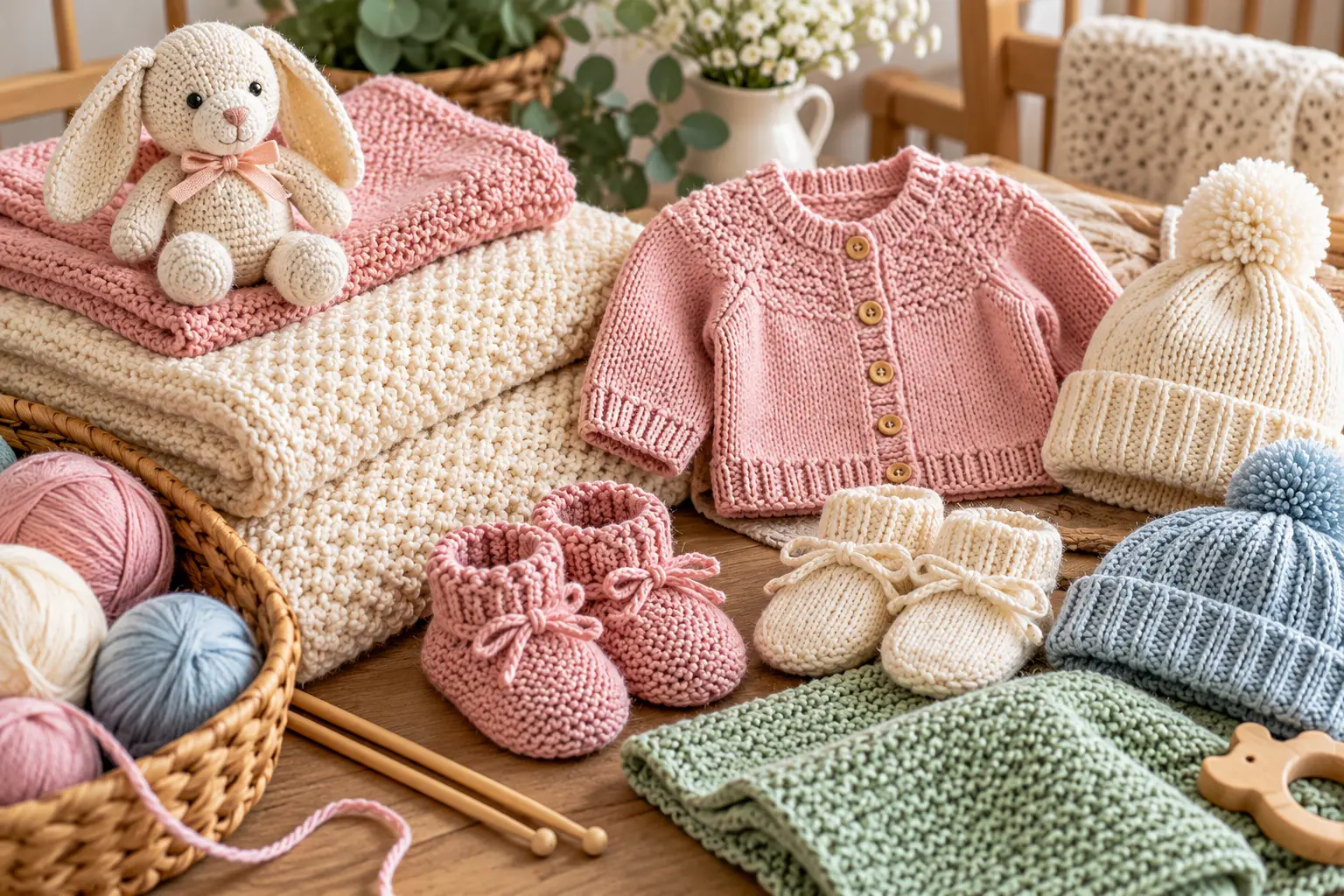
In this guide, we’ve collected 15 baby knitting patterns and project ideas for beginners, including blankets, hats, cardigans, booties, bonnets, sweaters, and small accessories.
You’ll also find guidance on yarn weight, needle size, baby sizing, gauge, difficulty level, and how to choose the right project for your skill level.
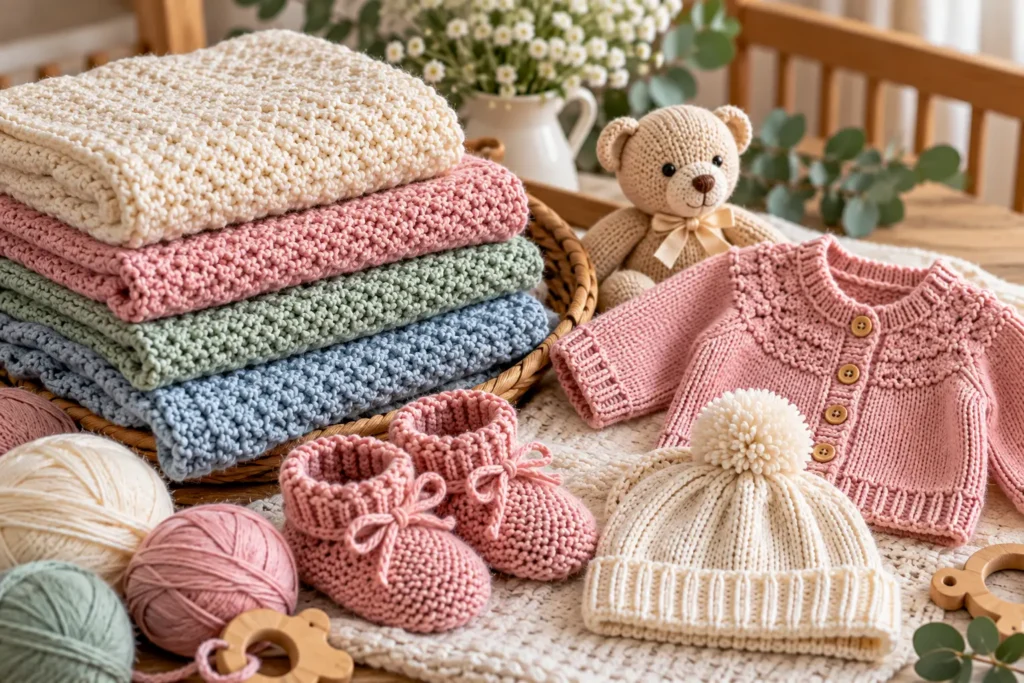
Quick Guide to These Baby Knitting Patterns
Before choosing a project, this table can help you compare the different options.
| Baby knitting project | Difficulty | Main skills | Approx. project size | Good for beginners |
|---|---|---|---|---|
| Garter Stitch Baby Blanket | Beginner | Knit stitch, casting on, binding off | Large | ⭐⭐⭐⭐⭐ |
| Simple Baby Hat | Beginner | Knit, purl, decreasing | Small | ⭐⭐⭐⭐ |
| Baby Cardigan | Beginner–Intermediate | Shaping, increases, decreases | Medium | ⭐⭐⭐ |
| Baby Booties | Beginner–Intermediate | Shaping, seaming | Small | ⭐⭐⭐ |
| Baby Scarf | Beginner | Knit stitch, basic finishing | Small | ⭐⭐⭐⭐⭐ |
| Simple Baby Sweater | Intermediate | Garment construction | Medium | ⭐⭐⭐ |
| Striped Baby Blanket | Beginner | Color changes | Large | ⭐⭐⭐⭐ |
| Ribbed Baby Hat | Beginner | Ribbing, decreasing | Small | ⭐⭐⭐⭐ |
| Baby Cardigan with Garter Edges | Beginner–Intermediate | Garter stitch, shaping | Medium | ⭐⭐⭐ |
| Baby Bonnet | Beginner–Intermediate | Shaping, seaming | Small | ⭐⭐⭐ |
| Baby Mittens | Intermediate | Small-circumference knitting | Very small | ⭐⭐⭐ |
| Baby Vest | Beginner–Intermediate | Shaping, finishing | Medium | ⭐⭐⭐ |
| Textured Baby Blanket | Beginner | Knit, purl, stitch pattern | Large | ⭐⭐⭐⭐ |
| Baby Sweater & Hat Set | Intermediate | Garment construction | Medium | ⭐⭐⭐ |
| Simple Border Baby Blanket | Beginner | Basic knitting, finishing | Large | ⭐⭐⭐⭐⭐ |
The exact yarn requirements, gauge, measurements, and needle sizes always depend on the individual pattern. For example, beginner baby patterns can range from worsted-weight projects to DK-weight garments, so it’s better to follow the pattern’s specifications rather than choosing needles based only on the yarn label. Ravelry
1. Garter Stitch Baby Blanket
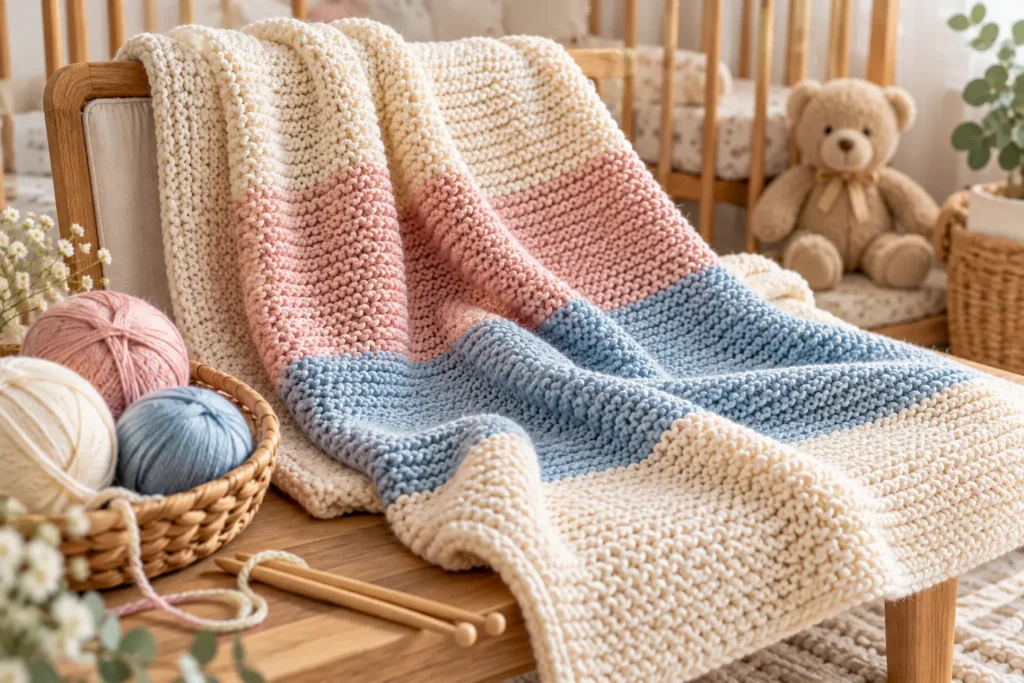
A simple garter stitch blanket is one of the easiest baby knitting patterns for beginners.
The main advantage is that you can create the entire fabric by knitting every row. You don’t have to memorize complicated stitch combinations, and the repetitive nature makes it a useful project for practicing consistent tension.
A blanket is also a good choice if you haven’t knitted a garment before because there is no complicated armhole, sleeve, or neckline shaping.
Why beginners like it
- Uses a basic knit stitch
- No complicated shaping
- Easy to customize
- Suitable for stripes or color blocks
- Good project for practicing tension
For a more textured alternative, seed stitch baby blankets can also be beginner-friendly because they rely mainly on knit and purl stitches. Some current beginner patterns offer multiple blanket sizes, from small newborn blankets to larger crib sizes. Ravelry
Best for: Your first larger knitting project.
2. Simple Baby Hat
A knitted baby hat is a small project that can help you learn several useful techniques without committing to a large garment.
A basic hat might combine ribbing around the brim with stockinette stitch through the main section and decreases near the crown.
If you’re new to knitting hats, look for a pattern with clear instructions and a limited number of techniques.
Skills you may practice
- Casting on
- Knit and purl stitches
- Ribbing
- Decreasing
- Finishing and weaving in ends
One important point is sizing. Don’t rely only on labels such as “newborn” or “0–3 months.” Always compare the finished measurements provided by the pattern.
Best for: Beginners ready to try their first wearable project.
3. Easy Baby Cardigan
A baby cardigan is a natural next step after you’ve become comfortable with basic knitting.
Compared with a blanket or scarf, a cardigan introduces more construction and shaping. However, baby garments are smaller than adult garments, which makes them a useful way to practice garment-making techniques.
A beginner-friendly cardigan may use simple stockinette stitch with garter stitch borders.
Some current baby cardigan patterns are specifically designed for beginner knitters and provide several baby sizes, detailed measurements, gauge information, and yarn requirements. Ravelry
Look for a cardigan with:
- Simple shaping
- Clear sizing
- Straightforward button bands
- Minimal colorwork
- Detailed finishing instructions
Best for: Beginners moving into garment knitting.
4. Knitted Baby Booties
Baby booties are small, quick projects that can make thoughtful handmade gifts.
They are more challenging than a basic scarf because you’ll usually need to follow shaping instructions carefully. However, their small size means you can learn these techniques without working on a large garment.
A simple bootie pattern may involve:
- Casting on
- Creating the upper section
- Shaping the sole
- Joining or seaming sections
- Finishing the edges
Best for: Knitters who already understand basic knit and purl stitches.
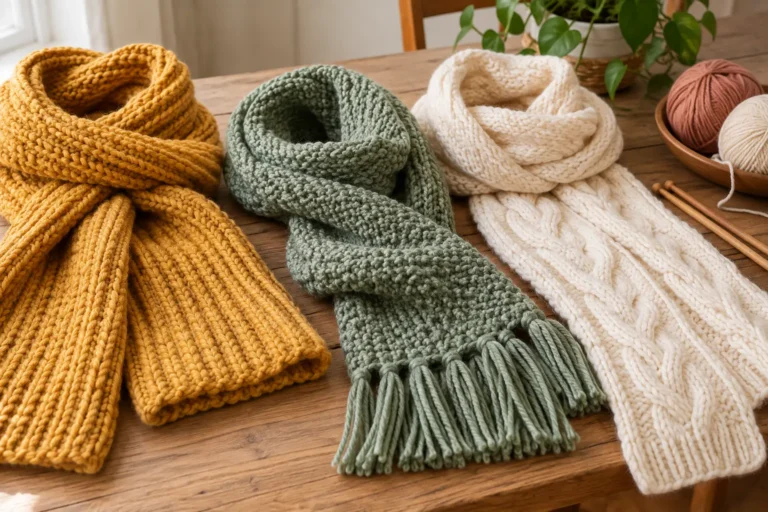
5. Simple Baby Scarf
A small knitted scarf is one of the easiest projects on this list.
You can use garter stitch, ribbing, or another simple repeating pattern. Because there is very little shaping, the main challenge is maintaining consistent tension and keeping your edges neat.
You can also experiment with:
- Two-color stripes
- Different stitch textures
- Contrasting borders
- Different yarn weights
For very young children, however, consider the intended use and age before choosing a scarf or any loose accessory.
Best for: Absolute beginners practicing basic stitches.
6. Simple Baby Sweater
A baby sweater is a more ambitious project, but it can be a great learning experience.
Instead of jumping straight into a complicated adult sweater, a smaller baby garment lets you practice the basic principles of sweater construction.
Depending on the design, you may work:
- From the bottom up
- From the top down
- In separate pieces
- In one piece
A beginner should look for a sweater with straightforward shaping and clear instructions.
Best for: Knitters who have already completed a few basic projects.
7. Striped Baby Blanket
Once you’ve mastered basic knitting, adding color is an easy way to make a blanket more interesting.
You don’t need complicated Fair Isle techniques to create attractive colorwork. Simple horizontal stripes can completely change the appearance of a basic blanket.
Easy stripe ideas
| Style | Difficulty | Effect |
|---|---|---|
| Two wide colors | Easy | Clean and modern |
| Three repeating colors | Easy | Playful |
| Thin stripes | Easy | More detailed |
| Color blocks | Easy | Bold |
| Neutral + accent | Easy | Minimal |
A striped baby blanket is also a good opportunity to learn how to change yarn colors and manage yarn ends.
Best for: Beginners who want to introduce color into their projects.
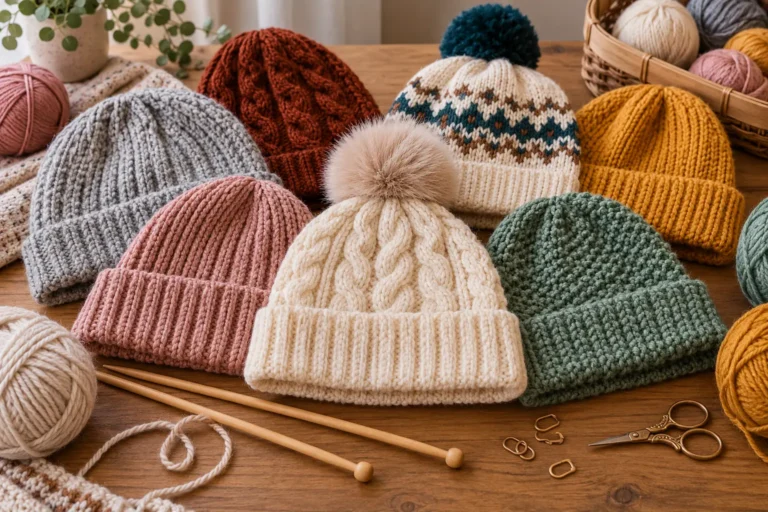
8. Ribbed Baby Hat
A ribbed hat is another excellent beginner project.
Ribbing is commonly used around hat brims because it creates a stretchy fabric. A simple hat can combine a ribbed brim with a plain stockinette body.
You will usually need to understand basic decreases toward the crown.
Typical structure
Ribbed brim → Main body → Crown decreases → Finishing
The exact number of stitches and rows will depend on the pattern and gauge.
Best for: Beginners who want to practice shaping.
9. Baby Cardigan With Garter Stitch Edges
If you like the classic look of handmade baby clothes, try a cardigan that combines stockinette stitch with garter stitch borders.
The contrasting textures make a simple design look more finished without requiring complicated stitch patterns.
Garter stitch can be especially approachable because it is created by knitting every row when worked flat.
Best for: Beginners who want to make a first cardigan.
10. Simple Baby Bonnet
A knitted baby bonnet gives you another small garment to practice.
Many simple bonnet designs are worked flat and then joined, making them approachable for knitters who aren’t ready to work small circumferences in the round.
For example, beginner bonnet patterns can use garter stitch, basic shaping, and relatively straightforward construction. Ravelry
What makes a bonnet beginner-friendly?
- Simple stitch pattern
- Limited shaping
- Small amount of yarn
- Straightforward finishing
- Clear size measurements
Best for: Beginners looking for a small wearable project.
11. Easy Baby Mittens
Baby mittens are another small project that can help you practice shaping.
Because the finished pieces are tiny, even a small mistake can affect the final result, so following the pattern carefully is important.
Choose a simple mitten design without complicated cables or colorwork if this is your first pair.
Best for: Knitters who are comfortable following shaping instructions.
12. Simple Baby Vest
A knitted vest can be easier than a sweater because there are no sleeves to construct.
The basic structure usually involves:
Back + Front + Neckline + Armhole finishing
This makes a vest an interesting project for beginners who want to start learning garment construction.
A simple stitch pattern can keep the focus on shaping and finishing rather than complicated decoration.
Best for: Beginners moving from accessories to garments.
13. Textured Baby Blanket
If you’re comfortable with both knit and purl stitches, try a blanket featuring a simple textured stitch.
Popular beginner-friendly textures can include:
- Seed stitch
- Moss stitch
- Ribbing
- Simple basketweave
- Repeating knit-and-purl patterns
The advantage of this type of project is that you can create visual interest without needing complicated cables or colorwork.
Before starting, check the stitch repeat carefully. A pattern that says a stitch repeat is worked over a certain number of stitches needs to be followed consistently across the row.
Best for: Beginners who know knit and purl stitches.
14. Baby Sweater and Hat Set
If you’re making a handmade gift, a matching sweater and hat can create a coordinated set.
Rather than starting both projects at the same time, finish the simpler project first. A hat can help you become familiar with the yarn and gauge before moving onto the sweater.
A coordinated set can use:
- The same yarn
- The same color
- Matching borders
- The same stitch pattern
This also gives you an opportunity to practice several techniques across two related projects.
Best for: Confident beginners and intermediate knitters.
15. Classic Baby Blanket With a Simple Border
A basic blanket with a contrasting border is a great way to create a polished-looking project without complicated knitting.
The center can use a simple stitch while the border introduces another color or texture.
For example:
Main color: Cream
Border: Sage green
Stitch: Garter stitch
Style: Minimal and classic
The important part is to choose a yarn that is practical for the intended use and follow its care instructions.
Best for: Beginners who want a larger handmade project.
How to Choose the Best Baby Knitting Pattern
Not every beginner needs to start with the same project.
Your best choice depends on the skills you already have and how much time you want to spend.
If you’re a complete beginner
Start with:
- Garter stitch blanket
- Simple scarf
- Basic striped blanket
These projects allow you to focus mainly on consistent stitches and finishing.
If you know knit and purl
Try:
- Baby hat
- Textured blanket
- Ribbed hat
- Simple bonnet
If you’ve already completed several projects
You can move toward:
- Baby cardigan
- Baby sweater
- Baby vest
- Matching sweater and hat set
This progression lets you build skills gradually instead of choosing a project that is too complicated.
Choosing Yarn for Baby Knitting Projects
Yarn choice is especially important when making something for a baby.
You’ll want to think about softness, durability, washing requirements, and the construction of the finished item.
DK and Worsted Weight
Many baby knitting patterns use DK/light or worsted-weight yarn, but there isn’t one universal yarn weight for every project.
For example, current baby patterns can use DK yarn with 3–4 mm needles, while other beginner projects use worsted yarn and larger needles. Ravelry
That’s why you should always follow the yarn weight and needle recommendations given by your chosen pattern.
| Yarn weight | General characteristic | Common project types |
|---|---|---|
| Fingering | Lightweight | Delicate garments |
| DK | Medium-light | Hats, sweaters, blankets |
| Worsted | Medium | Blankets, hats, garments |
| Bulky | Thick | Quick, warm projects |
The table is only a general guide. Gauge is more important than simply matching the yarn name.
Why Gauge Matters for Baby Knitting Patterns
Gauge tells you how many stitches and rows fit into a specific measurement.
For example, a pattern might specify:
20 stitches × 28 rows = 4 × 4 inches
If your gauge is significantly different, the finished item may not match the intended size.
This is especially important for baby garments because a small difference in gauge can change the finished measurements.
Before starting a sweater, cardigan, hat, or other fitted garment, make a gauge swatch when the pattern calls for one.
Some existing baby patterns specify gauge such as 19 stitches and 27 rows over 4 inches, while others use different stitch counts depending on the yarn and construction. Ravelry
Understanding Baby Knitting Sizes
One of the most common mistakes beginners make is choosing a pattern based only on the age printed on the label.
A pattern may list:
- Newborn
- 0–3 months
- 3–6 months
- 6–12 months
- 12–18 months
- 18–24 months
But sizing varies between patterns.
For example, one baby cardigan pattern may provide finished chest measurements of 48–64 cm across several sizes, while another garment will use completely different measurements. Ravelry
Always check:
- Finished chest circumference
- Garment length
- Sleeve length
- Hat circumference
- Blanket dimensions
- Pattern ease
Tip: Keep the finished measurements beside you while knitting rather than relying only on the age label.
Baby Knitting Safety Considerations
When making knitted items for babies, think about how the finished project will be used.
For wearable items, avoid unnecessary loose decorations or small detachable components. If a pattern uses buttons or other attachments, make sure they are securely fastened and appropriate for the intended age.
For sleep-related products, don’t assume that a knitted item is automatically suitable for sleeping. Follow current infant-safety recommendations for the specific product and age.
For many beginners, simple designs without detachable decorations are the easiest choice.
How Much Yarn Do You Need?
The amount of yarn required depends heavily on:
- Project type
- Size
- Yarn weight
- Stitch pattern
- Needle size
- Gauge
- Number of colors
For example, a small bonnet may require only a modest amount of yarn, while a baby blanket can require considerably more. Current free baby patterns show how widely requirements can vary between projects. Ravelry
Always check the pattern’s yardage before purchasing yarn.
If the pattern lists both grams and yards/meters, use the measurement that matches the yarn you’re buying.
Beginner Mistakes to Avoid
1. Skipping the gauge swatch
For fitted garments, this can lead to an incorrect finished size.
2. Choosing a pattern that’s too difficult
A beautiful pattern isn’t necessarily the right first project.
Start with techniques you already understand and add new skills gradually.
3. Ignoring finished measurements
Age labels aren’t enough. Compare the actual measurements.
4. Buying too little yarn
Always check the required yardage before starting.
5. Not reading the pattern first
Read through the instructions before casting on so you know what techniques you’ll need.
6. Losing track of rows
Use a row counter, pencil, or simple notes to keep track of your progress.
Baby Knitting Patterns: Quick Decision Guide
Not sure which project to choose?
| If you want… | Choose… |
|---|---|
| Your first-ever knitting project | Garter stitch blanket |
| A quick project | Baby hat |
| A handmade gift | Baby booties |
| A wearable garment | Baby cardigan |
| To practice color | Striped blanket |
| To practice texture | Textured blanket |
| To learn shaping | Baby hat |
| To learn garment construction | Baby vest |
| A matching gift | Sweater + hat set |
| A small flat project | Baby bonnet |
Frequently Asked Questions
What is the easiest baby knitting project for a beginner?
A simple garter stitch baby blanket is one of the easiest options because it can be worked using basic knit stitches without complicated shaping. A simple scarf can also be a good starting project.
What yarn is best for baby knitting?
There isn’t one yarn that is best for every project. Look for yarn appropriate for the pattern, with suitable softness, durability, and care instructions. Always follow the recommended yarn weight and gauge.
What size knitting needles are best for baby projects?
Needle size depends on the yarn and pattern. Baby projects can use different needle sizes, so don’t choose needles solely because the project is for a baby.
Are baby knitting patterns difficult?
Many are beginner-friendly, particularly blankets, simple hats, scarves, and basic accessories. Garments such as sweaters and cardigans usually require more shaping and construction skills.
How do I choose a baby knitting pattern?
Start by checking the difficulty level, yarn weight, gauge, finished measurements, required techniques, and estimated yarn requirements. Choose a project that matches the skills you already have.
Can beginners knit baby cardigans?
Yes. A beginner who is comfortable with basic stitches can choose a simple cardigan designed specifically for beginners. Look for clear instructions, straightforward shaping, and multiple size measurements.
What should I knit first for a baby gift?
A simple hat, blanket, bonnet, or pair of booties can make a manageable handmade gift. Choose according to your current skill level and the intended use of the finished item.
Final Thoughts
The best baby knitting patterns for beginners aren’t necessarily the most complicated or decorative ones. A simple project that teaches you useful techniques can be much more valuable than a difficult pattern that becomes frustrating halfway through.
If you’re completely new to knitting, start with a garter stitch blanket, scarf, or simple hat. Once you’re comfortable with those projects, you can move into baby bonnets, booties, vests, cardigans, and sweaters.
Take your time with gauge and measurements, choose yarn that suits the project, and read the complete pattern before casting on.
And if you’re looking for more projects after finishing your baby knit, explore our complete collection of knitting patterns on Knitona for more ideas for beginners and experienced knitters.